
Look Like a Michelin Star Bad*ass with The #1 One Kitchen Skill That Instantly Makes Your Food More Delicious (You’ll Never Guess!)
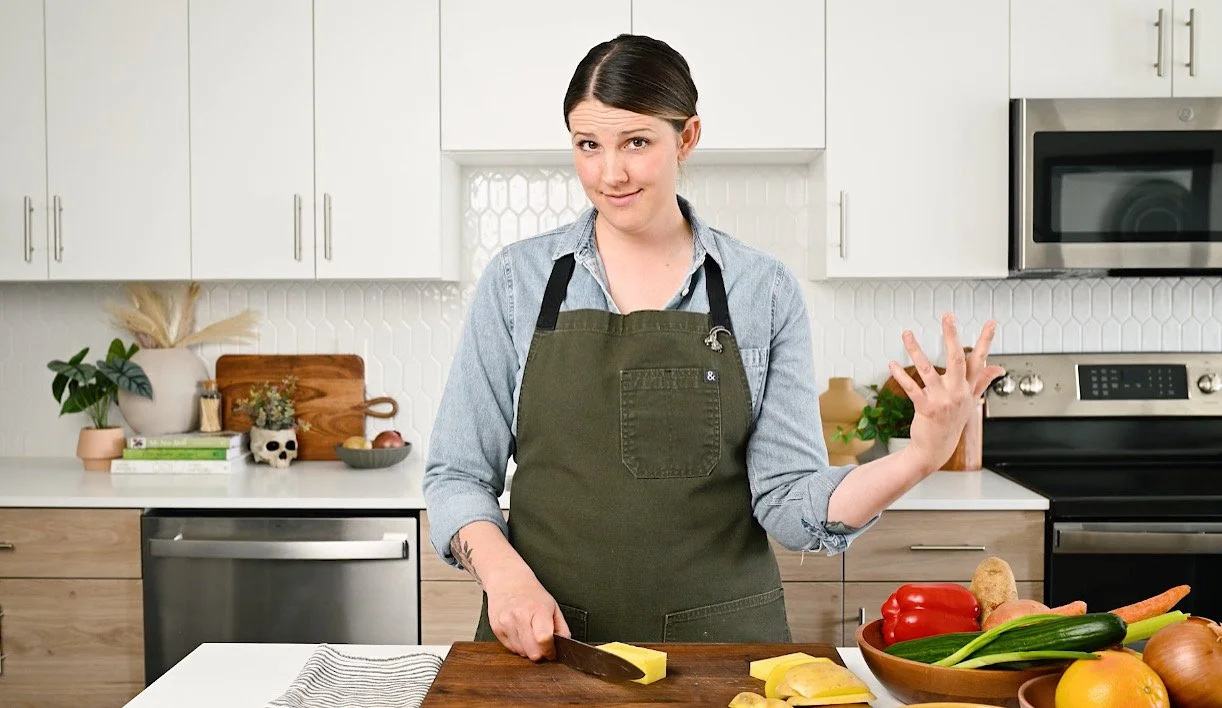
Any of these sound, errrrrr, familiar?
01
I get nervous around ingredients that I am not familiar with and even ones that I am. What is the right way to cut an onion?!
02
It takes me 3 hours to prepare dinner. I would like to be able to get dinner on the table without a huge time commitment.
03
I am really interested in making my food look exceptionally good and, dare I say, professional. Watch out Instagram!
Or maybe you just have a new passion for cooking, but your vegetables currently look like you cut them with a shovel. 🤷♀️
Here’s a secret no one’s ever told you: food is more delicious when it’s cookedcut right.



I know, see?
You didn’t see that one coming, did you?
But, it’s a little-known truth among professional chefs that gives them—ready for it???—the professional edge.
(Couldn’t resist.)
The way you cut your food will change how you taste your food. #facts
You might be skeptical, thinking to yourself: okay, Nicole, will it really matter if my carrots are slightly… abstract?
But yes. It actually does, Jim. 🥕
Which means that the difference between “pretty good” and restaurant-level delicious often comes down to something surprisingly simple:
How you cut the food before it ever hits the pan.

Knife Skills Are Hot
〰️
Knife Skills Are Hot 〰️
How you cut food affects how it cooks, how it releases flavor, and even how it feels in your mouth. 👅
#1
Change how food is cut and you literally change how heat, salt, and fat interact with it.
Every time you cut something, you create new exposed surface.
Flavor happens at the surface.
Salt sticks there.
Fat coats it.
Heat browns it.
So the more surface area you create, the more flavor can happen.
Example: Garlic
Sliced garlic → mild, slightly sweet
Minced garlic → stronger
Garlic paste → extremely intense
Why?
Because smashing garlic ruptures more cells and releases allicin, the compound that gives garlic its punch.
Same ingredient.
Three different cuts.
Three totally different flavors.
#2
Different cuts create different eating experiences.
That’s why chefs choose specific cuts for specific dishes.
Example: Onions
A diced onion behaves differently than sliced onion.
Diced onion
melts into sauces
distributes flavor evenly
Sliced onion
stays distinct
creates texture
That’s why diced onion goes into bolognese, but sliced onion goes into fajitas.
Same onion. Different job.
Knife Skills Are Life Skills
〰️
Knife Skills Are Life Skills 〰️
#3
Thickness changes mouthfeel. (Now there’s a word you never thought you’d say out loud.)
Before your brain even starts identifying what something tastes like, it’s already processing how it feels in your mouth — crunch, softness, resistance, juiciness, slipperiness. (Worst word in English language?) That first half-second shapes your entire perception of the food.
So when you change the way something is cut, you’re not just changing the look, but you’re changing the eating experience itself.
Take something simple like a cucumber.
Example: Cucumber
Thick chunks → crunchy and watery
Thin slices → delicate and refreshing
Julienne strips → light and salad-friendly
Same vegetable.
Same flavor compounds.
But the experience changes because the structure of the bite changed.
And so much more.
Like did you know that how you cut your herbs changes how they taste, too? They bruise easily, so the way they’re cut affects the oils they release. (WHAT? I know.)
(P.S. Professional chefs often tear basil by hand for this reason…so it doesn’t get too bitter!)
Professional cooks aren’t magic.
They just control variables most home cooks ignore.
That’s why culinary school spends weeks on knife skills before students cook anything fancy.
Because if the cuts are wrong:
food cooks unevenly
seasoning distributes poorly
texture feels off
flavor changes
And suddenly the recipe “doesn’t work.”
Introducing Knife Skills 101
A hands-on workshop for home cooks
Our approach encourages reflection as much as action. You’ll walk away not only with new techniques, but with a deeper understanding of how and why they work. The goal is to leave you with ideas and skills that feel clear, useful, and genuinely meaningful in your life.

Course 01Effective Communication
Learn how to communicate with clarity, confidence, and purpose. This course explores active listening, tone, body language, and message delivery for stronger, more impactful connections.

Course 02Content Planning
Learn tools for organizing ideas, setting goals, and building consistent schedules. From brainstorming to publishing, this course helps turn scattered thoughts into a cohesive plan.

Course 03Process Improvement
Discover how to analyze workflows, identify inefficiencies, and implement smarter systems. This course helps you create processes that actually work, for a team or just for yourself.
Your Questions, Answered-
Membership typically includes access to our full library of digital content—videos, courses, resources, and any new material we release while you're subscribed.
-
Definitely. You can switch plans, upgrade, or make changes to your membership anytime.
-
Yes! We’re always expanding the library with fresh content, tools, and updates to keep your learning and inspiration going strong.
-
Memberships are flexible and can be canceled at any time from your account. You’ll retain access through the end of your current billing cycle.
Cooking isn’t just about the ingredients. It’s about the geometry.