Slathering, Basting, and Schmearing Our Way to Victory
Salted Butter vs Unsalted Butter: The Final Showdown
Welcome to our first newsletter EVERRRR for BUTTER CULT!
As promised, I am here bright-eyed and bushy-tailed, something is simmering on the stove, and something is NOT burning in the oven (cause I set a timer😉). We are still going to laugh, learn, and talk ad nauseam about all things crispy, crusty, and oh so fatty here, don’t you worry. Just sit back and relax and learn something, why don’t ya!
The theme for today is a deep dive more like a shallow swim (let’s get scuba certified before we do any diving), about the ingredients we are choosing to cook with, gobble up, and fuel our bodies. One of the simplest ways to gain confidence in the kitchen is through knowledge! Understanding the what, why, when, and how the hell🙃 about your ingredients is a great way to get you out of your head and into the kitchen with ease, and a cute apron always helps.
Bet you can’t guess what ingredient is up first?! The star of this whole operation, the apple of my eye, the literal golden child, the tastiest fat there ever was….
Butter
We are kicking off Butter Cult by talking about butter! (Round of applause, please.)
We know it, we love it, we worship it??????—!!!!!!!!
Is butter a carb? (For the millennials 💕)
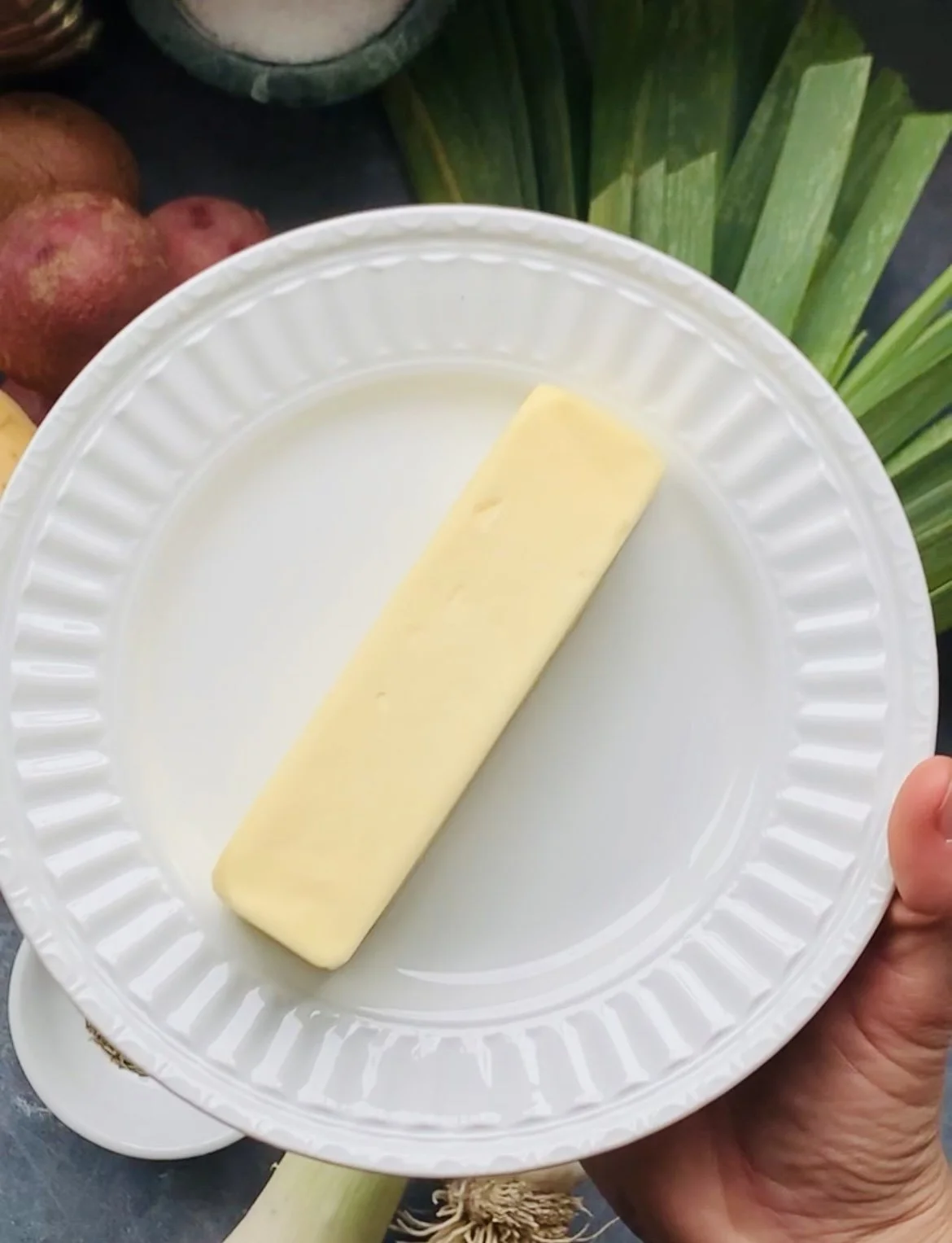
Butter is a delicious fat made from churning the crap out of cream. When cream is agitated for long enough, the butter fats in the cream begin to stick together and separate from the liquid. This liquid is then strained off and saved because this is buttermilk, my friends! That tangy, delicious milk we add to marinades, pancakes, and maybe just have a sip or two straight out of the carton. The grains of butter fat that have begun to stick together are then gently but firmly pressed and kneaded until a big, beautiful butter fat mass is formed. But wait, we are not done. The butter is then continued to be kneaded and washed in water to remove all the excess buttermilk—this prevents spoilage. The last but not least step is kneading the butter on a flat surface to make sure all the water is out, and we are left with creamy, dreamy, delicious butter action. Now, where is my toast!
Salted and Unsalted Butter
My overall guidelines for when to use salted butter or unsalted butter are as follows:
Unsalted - Cooking, baking, bathing🛀, and everything in between.
Salted - Anything that has been toasted and requires a slather of butter.
I prefer to be in control of the amount of salt that I am adding to my food. This is why my preference is mostly unsalted. Even when I am slathering some unsalted butter on toast, I will sprinkle a little bit of flaky sea salt on top so I am salting my butter just on my own accord. A good rule of thumb for salt (I know we are talking about butter, but this is relevant) is that you can always add more salt, but you can never remove salt.
Sweet Cream versus Cultured Butter
It’s not a competition, more of a friendly comparison, if you will. I use the sweet cream mostly just out of convenience, and use the cultured butter for when I am relying on the butter flavor to be the star of the show. Think: Bread and (cultured) butter👌.
Sweet cream butter is made with fresh cream and has a mild, kind of sweet, creamy flavor. Most mass-produced butter made in America is this kind of butter; it is faster and cheaper to produce and contains 80% butterfat.
Cultured butter (European-style butter) is made with fermented cream, which makes the flavor profile richer, tangier, and more complex, and contains 82-86% butterfat (hey girl, nice percentages🤷♀️).
Try this:
Like all ingredients, the quality of your butter really does matter. I want you to take this to the streets (or a well-lit grocery store) and try this:
Buy a sweet cream butter (store brand), something relatively inexpensive.
Buy a nice butter OR a cultured butter. Kerigold is accessible, affordable, and a great butter to conduct this comparison with.
In the comfort of your own home, open up both butters and compare the taste, texture, and color.
Which butter is better? Is there a time and place for every butter?
Report back!
Did you know that you can make your own butter?
Butter is very simple to make. If you have never tried it, I encourage you to give it a try! I would advise only using your homemade butter for slathering, basting, and shmearing. Homemade butter is not as stable as the commercial butter we buy at the store and may not hold up to all your baking dreams. Save yourself the agony and buy butter for your baked goods.
Ingredients:
1 quart heavy cream - remember quality matters here!
Sea salt (if you wanna)
Pour the cream into the bowl of a stand mixer with the whisk attachment.
Whip the crap out of the cream (official kitchen phrase) until liquid begins to separate and a glob of butter fat begins to form.
Drain the liquid, AKA buttermilk, and save it for your Sunday pancakes.
Add water to a large bowl or pot and knead the blob of butter fat together while submerged in the water.
When the water gets cloudy, drain and repeat the kneading process until the water runs clear. Washing off and squeezing out all the remaining buttermilk will help to prevent spoilage.
Drain the water and turn out your blob of butter onto a clean workspace. Continue to knead until most of the water is removed.
If you want to add some sea salt, sprinkle in a few pinches and continue to knead to incorporate the salt.
Shape your butter into a log and wrap it tightly in plastic wrap.
Best to keep this butter in the fridge to preserve freshness.
Enjoy!!!!!!
Will butter actually make things better?
YES. And no.
When TO use butter:
Low and slow cooking - like scrambled eggs
On bread - always - salted if you wanna
To add a richness and luxurious flavor to a sauce or soup
To finish steaks
For baking
For browning 🤤
When NOT to use butter:
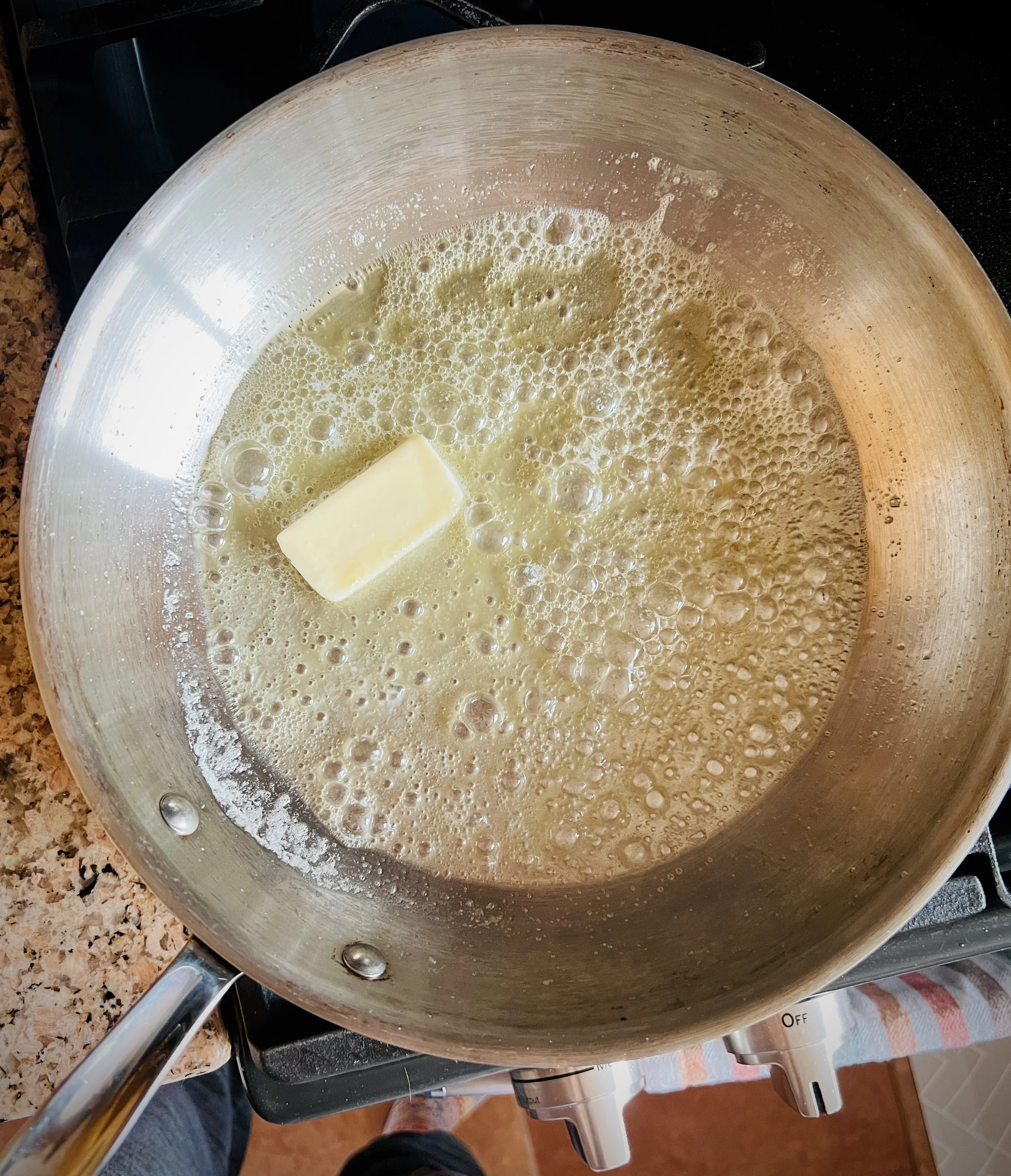
High heat cooking - it burns!
When you want your food to taste light and bright.
Thinking it will add flavor to your bland food. It will not make your limp dish taste elevated, it will just taste like butter.
Butter is great, but it is not a miracle worker.
Let’s pause all this butter talk and have a moment of silence for all the butter one-hit wonders who have tried to make it in this big, fatty world.
Spray butter….Margarine….Crisco…..Butter made with olive oil….
I will have you know I was poking around the butter section (as one does), AND spray butter is still around! Who is still buying this? I must know.
Let’s get practical.
Now that we have all this delicious butter, where do we store it?
Fridge: When it is just too hot out, that your kitchen heats up real good in the peak summer months, and the counter butter turns into a puddle. Reserves for counter butter.
Freezer: In theory, butter should be fine in the fridge. To preserve precious fridge space and prolong freshness, keep your bulk butter purchases in the freezer.
Counter: For your day-to-day use. Toast, scrambled eggs, just a little dab thrown into some sautéed squash, is a real game-changer. If left uncovered, I knew a cat named Twinkie (for real) that was known to lick butter. Always cover your butter! You have been warned.
Did you learn something about butter? Do you want a big scoop of butter right now? I hope the answer is yes to both those questions, and also that you remember the phrase everything in moderation. Annoying but oh so true.
Thanks for being a part of Butter Cult! There are SO many fun things on the horizon, and I am excited that you are here to enjoy them with me. Being a part of the Butter Cult is FREE, so spread the word like you would a soft pat of butter on a slice of perfectly toasted sourdough.
Cheers,
Nicole | Butter Enthusiast🧈