A Salt Lover’s Manifesto
Not all salt is created equal
How many salts are too many salts? My answer to that question is THE LIMIT DOES NOT EXIST! I have a different salt for every occasion, what Carry Bradshaw is to shoes, I am to salt (aka a hoarder of sorts, BUT I assure you I NEED them all). How many salts do ya’ll have in your cupboard? Now I have to know.
We use salt every day and in everything, including sweets and desserts. Salt is the backbone of bringing out and balancing flavors. Without salt, it would be a cold, dark, and flavorless world. The horror!
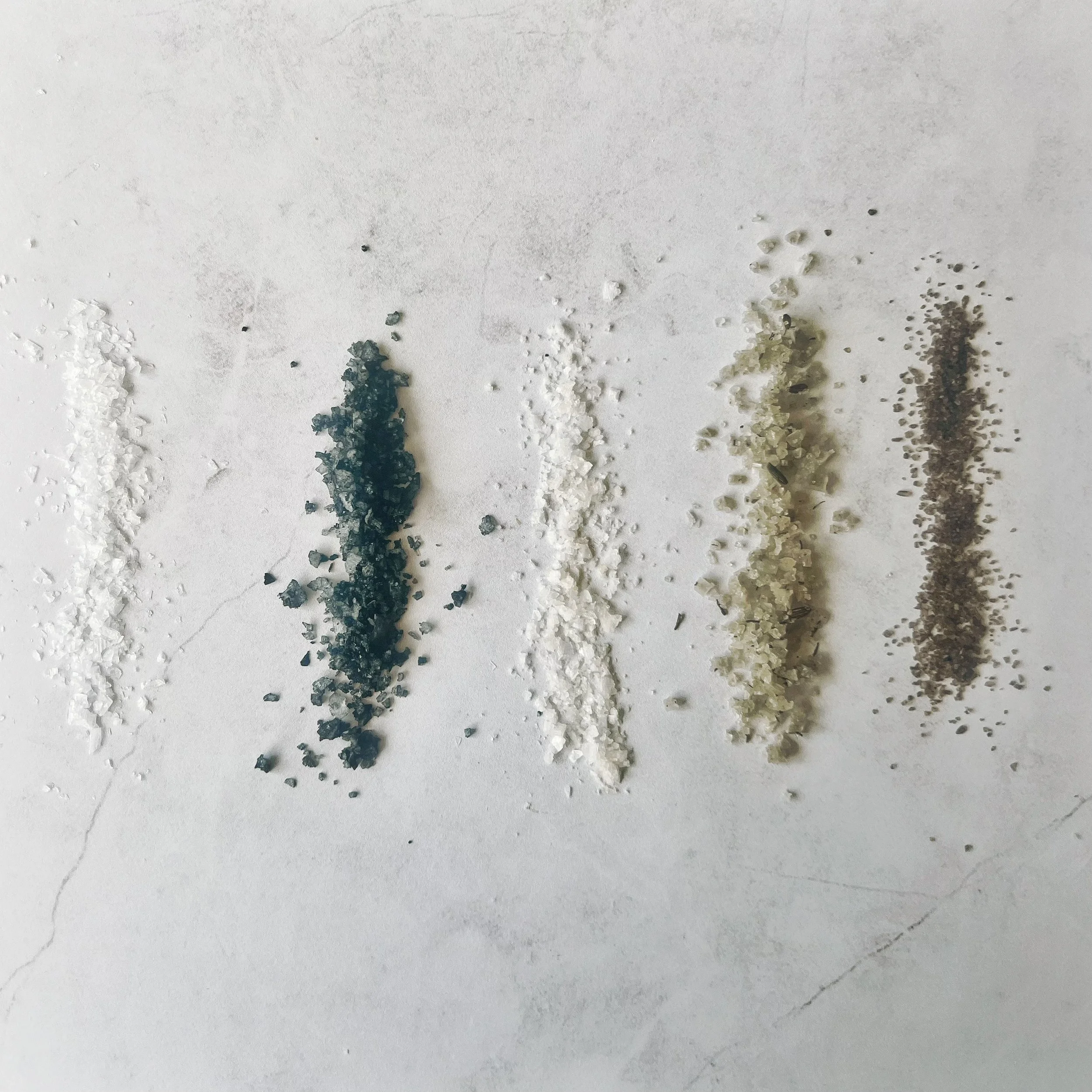
Trying not to completely go off the rails on this topic here is a little salty breakdown of a few different kinds of salts. I don’t want to scare you…yet, so we will start out slowly.
Kosher Salt - This coarse-grained salt is the go-to for cooking, baking, brining, smoking, pickling, and even cleaning! Its larger structure helps when measuring and controlling the amount of salt we want to use in a dish. This is an industrially made salt and lacks the flavor complexity of other artisanal salts. Still a great and accessible go-to salt.
Table Salt - A superfine salt that is often iodized. The structure of this salt makes it hard to cover the surface area of foods evenly, which can result in over or under salting your food. The best place for this salt is in the back of your cupboard, lying in wait for the apocalypse.
Sea Salt - Produced from the evaporation of seawater. Sea salt can be large and flaky or small and fine, depending on the harvesting process. The flavors of sea salt are incredibly nuanced and vary greatly depending on where in the world it is harvested from. This is a great go-to salt for cooking, brining, baking, and finishing.
Himalayan Salt - A rock salt that is mined in Pakistan and is light pinkish in color. It comes in larger chunks and needs to be ground before using. A beautiful all-purpose salt. It also makes a great lamp!
Flavored Salts - There are many salts that fall under this umbrella, and the size, texture, and taste vary just as much. Most of these salts should be used sparingly when finishing a dish and not during the actual cooking process. Examples: Lavender salt, smoked salt, and truffle salt.
Now that you know all about salts. What do you do if you accidentally over-salt your food? (It happens to the best of us, don’t fret.) There is no actual way to remove salt from a dish. It is about trying to distract your taste buds from the oversalted puzzle that we are going to solve.
Here are three methods to experiment with when you are in a ‘help, I am in an over-salted pickle!”
Add more “stuff” - It’s a simple yet effective way to counteract the salt content. Let’s say we are making guacamole, and oopsie doodle, we add too much salt. We could add more avocados until the amount of salt is balanced.
Sometimes this method will not make sense. If we have grilled up some chicken thighs and they are just waaaaay too salty, we can’t add more chicken to make them less salty. Are you with me?
Add some acid - Adding a splash of acid, vinegar, or lemon/lime juice is a great way to help neutralize the salt flavor and restore flavor harmony. Let’s use those over-salted chicken thighs we grilled up for this example. Squeeze a little lemon or lime juice on top to help save the day and make those chicken thighs not only edible but also add a more complex flavor to the entire experience by the addition of acid.
Add some fat - Not only will this add richness and creaminess, but the fat will help to coat your mouth and create a barrier between the over-saltiness and your taste buds. The type of fat is up to you; what makes sense with your dish? Heavy cream, unsalted butter, yogurt, sour cream, soft cheeses, avocado, or olive oil.
I said experiment earlier because every over-salting situation will require a different method or combination of methods to get to a solution that makes your dish taste great. If you are feeling brave, intentionally oversalt something and then correct it. Ooooooh, I bet you didn’t think I would dole out homework here!
Cheers,
Nicole | Butter Cult